

Beyond Search: AI Trip Planning Arrives
Planning day trips used to mean juggling browser tabs, sifting through reviews, and cobbling together info from many websites. It was a chore that often left you feeling overwhelmed before you even left home. Old methods, like search engines and static guidebooks, didn't keep up with personalized travel needs.
Now, AI is changing travel planning. It's moving beyond simple search to offer genuinely intelligent help. Generative AI, like that behind ChatGPT, is creating customized itineraries and recommendations with unprecedented detail and personalization.
AI can unlock experiences we might otherwise miss. It analyzes your preferences, checks real-time factors like weather and closures, and suggests hidden gems. 2026 is a key year because the technology is finally ready, and apps are stepping up. These tools are reshaping how we plan our escapes.
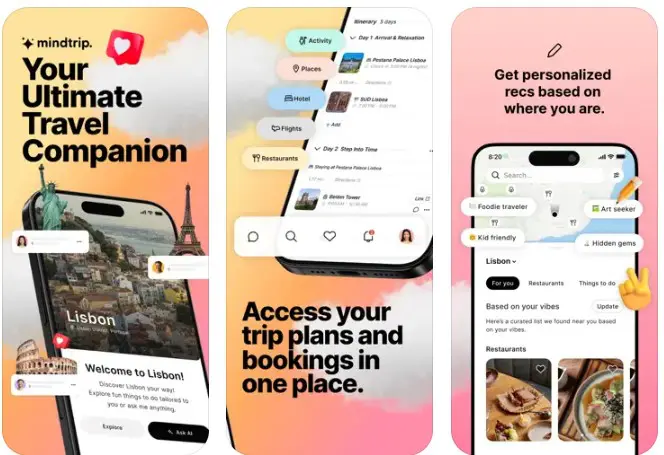
The Top 5 AI Day Trip Planners (2026)
The AI travel app market is growing fast. Here are five apps leading the way for day trip planning in 2026, each with a unique approach.
Tripplanner AI is a powerful option for those who want a truly comprehensive planning experience. It goes beyond basic itinerary generation, offering assistance with flights, hotels, and activities. What sets it apart is its ability to handle complex trip requests, factoring in multiple destinations and preferences. It's particularly good at suggesting off-the-beaten-path experiences and optimizing your schedule for maximum enjoyment. It currently supports North America, Europe, and parts of Asia.
Wanderlog has been around a bit longer but has quickly integrated AI features to enhance its capabilities. While it started as a collaborative trip planning tool, its AI component now allows for automatic itinerary creation based on your interests and travel style. Wanderlog excels at visualizing your trip on a map and offers a user-friendly interface. Its strength lies in its balance between AI assistance and manual control—you can easily tweak the AI-generated suggestions to fit your needs. It supports destinations worldwide.
Roam Around is a newer entrant, but it's quickly gaining popularity for its focus on spontaneous exploration. It's designed for travelers who want a little less planning and a little more discovery. Roam Around generates a route based on your location and interests, suggesting nearby attractions, restaurants, and hidden gems. It’s a great option for those who enjoy getting lost and stumbling upon unexpected adventures. It currently focuses on major cities in the US and Europe.
Plan Your Adventure (the app derived from the YouTube channel of the same name) is particularly strong for outdoor enthusiasts. It specializes in creating itineraries for hiking, camping, and other adventure activities. The AI considers factors like trail difficulty, elevation gain, and weather conditions to recommend suitable routes. It also integrates with mapping apps like Gaia GPS to provide detailed trail information. It primarily focuses on North American destinations.
Finally, Adobe Acrobat’s AI Travel Planner (integrated with its PDF tools) takes a slightly different tack. It leverages AI to analyze travel documents – confirmations, tickets, reservations – and proactively offers helpful suggestions and reminders. It’s less about building an itinerary from scratch and more about streamlining the logistics of an existing trip. It’s a useful companion for frequent travelers who juggle a lot of travel paperwork. It supports travel documents from any destination.
How These Apps Actually Work
These apps use a blend of AI technologies. Large language models (LLMs) understand your travel preferences and generate text for itineraries and recommendations. LLMs are trained on vast travel data, including guides, reviews, and user content.
Recommendation engines suggest attractions, restaurants, and activities based on your interests. They analyze your past travel, preferences, and social media activity to predict what you'll enjoy. Machine learning algorithms improve these recommendations with user feedback.
The apps handle constraints like budget, time, and transportation. They use optimization algorithms to create itineraries that maximize enjoyment within these limits. Real-time data, like weather and traffic, allows for dynamic plan adjustments. If a museum is closed, the AI suggests an alternative nearby.
Beyond Itineraries: Unexpected AI Features
These apps offer more than just itineraries. Many include innovative AI features to enhance the travel experience. Tripplanner AI offers AI-powered translation, helping you communicate with locals. Roam Around integrates with augmented reality apps for immersive experiences at historical sites.
Several apps use AI to find local events and hidden gems by scanning social media, event calendars, and blogs. Some generate personalized packing lists based on your destination, activities, and weather. Adobe Acrobat's integration with travel documents flags potential issues like expiring passports, beyond just reminders.
Integration with transportation services is becoming seamless. Some apps can automatically book flights, trains, and rental cars based on your itinerary, making travel planning more effortless.
Privacy & Data: What You're Sharing
Using AI travel apps means sharing personal data. These apps collect your travel preferences, location, and social media activity to personalize your experience. Understand what data is collected and how it's used.
Most apps have privacy policies detailing data collection. Review these policies before use, looking for information on data encryption, storage, and sharing. Be cautious about granting access to sensitive information like credit card details.
To protect your privacy, use a VPN on public Wi-Fi. Adjust app permissions to limit data access. Regularly review and update your privacy settings on devices and apps.
- Review Privacy Policies: Understand what data is collected.
- Limit App Permissions: Control data access.
- Use a VPN: Protect your data on public Wi-Fi.
Trip Planner AI vs. Gaia GPS: A Head-to-Head
undefined recent coverage from Outside Magazine, but they cater to very different types of travelers. Trip Planner AI is a broad-spectrum itinerary builder, excellent for creating day trips centered around cities, cultural experiences, or a mix of activities. It excels at providing a well-rounded plan, handling logistics, and suggesting diverse options.
Gaia GPS, on the other hand, is a mapping and navigation app primarily geared towards backcountry adventures. It’s the go-to choice for hikers, backpackers, and off-road enthusiasts. While it doesn't build complete itineraries in the same way as Trip Planner AI, it provides incredibly detailed maps, trail information, and offline navigation capabilities.
The trade-off is clear: Trip Planner AI offers convenience and breadth, while Gaia GPS offers depth and specialized functionality. If you’re planning a city-based day trip with a focus on sightseeing and cultural attractions, Trip Planner AI is the better choice. If you’re heading into the wilderness for a hiking or camping adventure, Gaia GPS is essential.
AI Travel App Comparison: Trip Planner AI vs. Gaia GPS (2026)
| Criteria | Trip Planner AI | Gaia GPS | Notes |
|---|---|---|---|
| Ease of Use | Generally intuitive interface, focuses on rapid itinerary generation. | Steeper learning curve, geared towards experienced outdoor users. | Trip Planner AI prioritizes quick planning; Gaia GPS offers extensive customization but requires more user expertise. |
| Itinerary Customization | Highly customizable, allows for detailed adjustments to AI-suggested itineraries. Users can specify interests, pace, and budget. | Offers route creation and modification, but focuses more on navigational aspects than comprehensive itinerary building. | Trip Planner AI excels at tailoring suggestions, while Gaia GPS is better for modifying existing routes. |
| Offline Access | Offers limited offline access to saved itineraries and maps. Functionality may be dependent on subscription tier. | Robust offline map downloads and GPS functionality are core features. | Gaia GPS is significantly stronger in areas with limited or no cellular connectivity. |
| Mapping Detail | Relies on underlying map data providers; detail level varies by location. Focus is on points of interest and route suggestions. | Exceptional topographic map detail, specifically designed for hiking and backcountry navigation. | Gaia GPS provides far superior mapping for outdoor adventures, while Trip Planner AI focuses on general travel planning. |
| Price | Pricing information not currently available. Likely operates on a subscription model with tiered access to features. | Offers a range of subscription options, including a free version with limited access and paid plans for expanded features. | Gaia GPS provides a clear pricing structure, while Trip Planner AI’s cost is currently undefined. |
| Suitability - City Exploration | Excellent for planning city-based day trips, suggesting attractions, restaurants, and transportation options. | Less focused on urban environments; functionality is available but not optimized for city exploration. | Trip Planner AI is better suited for planning trips centered around cities and cultural attractions. |
| Suitability - Outdoor Adventures | Can suggest hiking trails and outdoor activities, but lacks the specialized mapping and navigation tools of Gaia GPS. | Designed specifically for backcountry navigation, hiking, and off-road adventures. | Gaia GPS is the clear choice for serious outdoor enthusiasts requiring detailed maps and reliable GPS functionality. |
Illustrative comparison based on the article research brief. Verify current pricing, limits, and product details in the official docs before relying on it.
Apps Worth a Closer Look
While the five apps above represent the current leaders, a few other AI travel apps are showing promise. Inspirock is a long-standing trip planning website that has recently integrated AI features to enhance its itinerary generation capabilities. It's particularly good at creating multi-day trips, but it can also be used for day trip planning.
Hey Trip is another app to watch. It’s focused on creating personalized travel guides based on your interests and budget. It's still in its early stages of development, but it has a lot of potential. It’s worth keeping an eye on as it evolves.
The Future of AI & Day Trips
The evolution of AI in travel planning is far from over. We can expect to see even more personalized recommendations, driven by increasingly sophisticated machine learning algorithms. Seamless integration with virtual and augmented reality will allow you to preview your destination before you even arrive.
AI-driven travel companions, capable of providing real-time assistance and answering your questions, are also on the horizon. And, perhaps most ambitiously, we may eventually see fully autonomous trip planning, where AI handles every aspect of your travel arrangements, from booking flights and hotels to creating a detailed itinerary.
However, it’s important to remember that AI is a tool, not a replacement for human judgment. The best travel experiences often involve a bit of spontaneity and serendipity. The future of AI travel planning will likely involve a balance between intelligent automation and human exploration.
Essential Gear for Your AI-Planned Day Trips

10,000mAh capacity · PowerIQ charging technology for high-speed charging · Compact and travel-ready design
Keep your devices powered up throughout your day trips to ensure uninterrupted access to your AI travel planner and navigation.

Advanced noise cancellation for immersive listening · Comfortable over-ear design · Wireless Bluetooth connectivity with microphone
Enjoy your AI-generated itineraries and travel podcasts without distraction, creating a peaceful environment wherever you go.

Universal compatibility with multiple plug types · Includes USB-C and 4 USB-A ports for simultaneous charging · Compact and lightweight for easy packing
Ensure all your essential travel gadgets, including your smartphone and tablet for AI planning, can be charged in any international destination.

Provides secure, high-speed 4G LTE WiFi for up to 20 devices · Enables a private and secure wireless network · Offers internet connectivity anywhere with cellular service
Maintain a stable internet connection for your AI travel apps, allowing for real-time updates and seamless planning even in remote locations.
As an Amazon Associate I earn from qualifying purchases. Prices may vary.




No comments yet. Be the first to share your thoughts!